
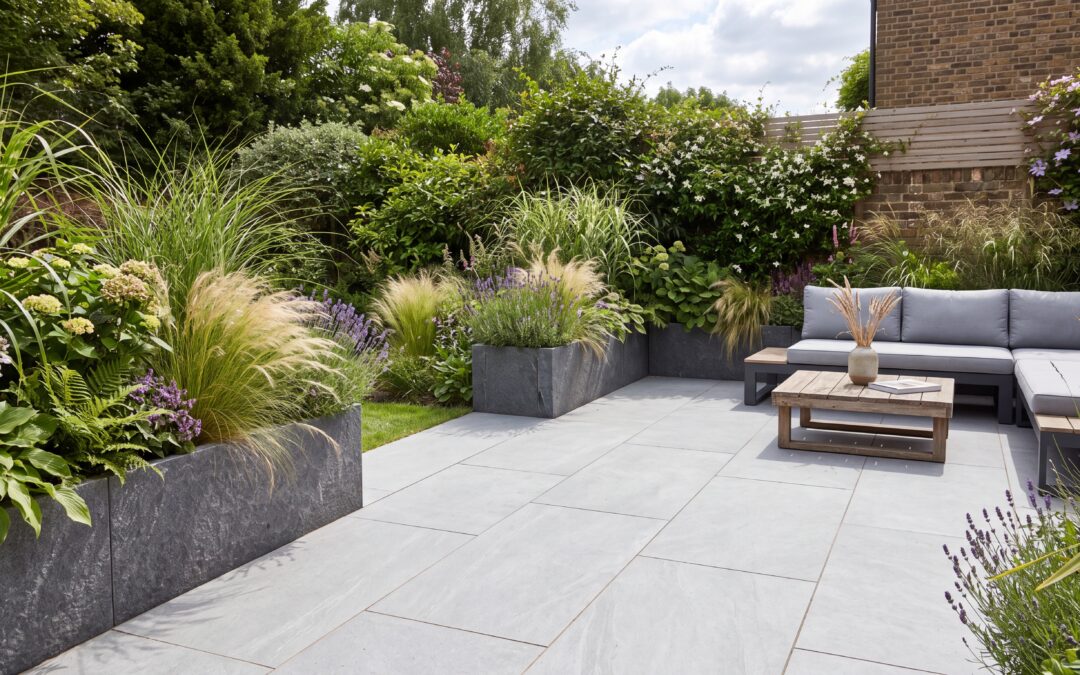
In the contemporary, fast-paced lifestyle, the domestic garden is increasingly viewed as an extension of our indoor living space—a sanctuary for relaxation rather than an additional source of demanding weekend labour. Consequently, the demand for sophisticated, low-maintenance landscaping has surged across the UK. Homeowners are seeking designs that deliver high visual impact and year-round structure without requiring exhaustive physical upkeep. Achieving this balance is not about compromising on natural beauty; rather, it is about making intelligent, long-term choices in hard materials, planting schemes, and technological integration.
The Structural Backbone: Hard Landscaping
To establish a truly low-maintenance outdoor space, one must start with the structural foundation. Traditional expansive lawns and complex, high-maintenance herbaceous borders can be substituted with high-quality hard surfaces. Utilizing premium materials such as porcelain paving, natural stone, or composite decking drastically reduces the need for weeding, mowing, and seasonal edging. Indeed, embracing modern landscaping trends often means integrating these clean, durable surfaces to form distinct functional zones, from outdoor dining areas to sleek fire-pit lounges.
For those navigating restricted urban plots, this structured approach is particularly advantageous. By designing a clean layout with defined zones, you can execute a cohesive space-smart landscaping strategy that maximizes usability while minimizing maintenance. Opting for large-format slabs reduces the number of grout joints where weeds can establish, saving hours of tedious clearance work each season.
Reimagining the Lawn: Tech and Artificial Turf
A lush lawn has long been the hallmark of the British garden, but keeping it pristine demands significant time and resources. For some, the solution lies in upgrading lawn care through automated technology. Homeowners are increasingly deploying robotic lawn mowers to manage their turf autonomously. These devices trim the grass continuously, which promotes a denser, healthier sward and eliminates the need for manual mowing and green waste disposal. If you prefer to retain traditional turf but need expert strategies to keep it healthy with minimal fuss, following professional guidelines to revive your lawn can prevent systemic issues before they arise.
Alternatively, many UK homeowners are choosing to sidestep lawn maintenance entirely. The popularity of modern, high-grade artificial grass has risen sharply, offering a perennially green, weed-free surface that requires only occasional brushing. This is particularly effective in heavily shaded plots where natural grass struggles to thrive, saving you the ongoing cycle of overseeding, moss control, and fertilization.
Simplified Planting and Minimalist Schemes
A low-maintenance garden does not have to be devoid of life. The key is adopting a restrained, high-performance plant palette. By focusing on a minimalist garden design, you can select hardy, evergreen shrubs and ornamental grasses that provide structural interest through every season. Taxus baccata (yew), dwarf conifers, and resilient grasses like Miscanthus or Calamagrostis require minimal pruning and look exceptional when backlit by architectural lighting.
Grouping plants by their water requirements and utilizing heavy mulching with slate chips or bark will conserve moisture and suppress weeds. Integrating these elements alongside sustainable landscaping trends, such as rainwater harvesting and drought-tolerant planting, ensures your garden remains resilient against dry UK summers with minimal intervention.
Professional Infrastructure for Long-Term Ease
Finally, the longevity of any low-maintenance garden relies on what lies beneath the surface. Efficient drainage, automatic irrigation systems, and outdoor cabling are critical. To install these utilities cleanly without disrupting established boundaries, modern installers rely on advanced tools. Utilizing trencher machinery ensures that cable and pipe laying is fast, precise, and minimally invasive, preventing future structural subsidence or waterlogging issues that could disrupt your low-stress outdoor haven.