
When planning to transform your home’s exterior, aesthetic appeal and material selection are often at the forefront of your considerations. However, one of the most critical, yet frequently overlooked, aspects of a successful installation is water management. In the United Kingdom, where heavy downpours are a regular occurrence, selecting the correct driveway drainage options is essential to prevent standing water, protect property foundations, and remain compliant with local planning laws.
Understanding UK Legislation: SuDS Regulations
Before exploring the technical driveway drainage options, it is vital to understand the legal framework governing surface water. Under the Sustainable Drainage Systems (SuDS) regulations, UK homeowners must ensure that any new or replacement driveway exceeding five square metres does not direct surface water run-off onto public highways or into the public sewer network. If the chosen design is impermeable and lacks a dedicated drainage solution, you will require formal planning permission.
Adhering to these regulations is not merely a legal checkbox; it protects the wider community from localized flooding. Fortunately, by integrating professional drainage solutions or utilizing permeable materials, you can easily bypass the need for planning permission while ensuring your driveway remains robust and dry year-round.
Primary Driveway Drainage Options for UK Homes
Depending on your chosen topography, soil type, and aesthetic preferences, there are several effective driveway drainage options to consider during the design phase.
1. Channel or Linear Drains
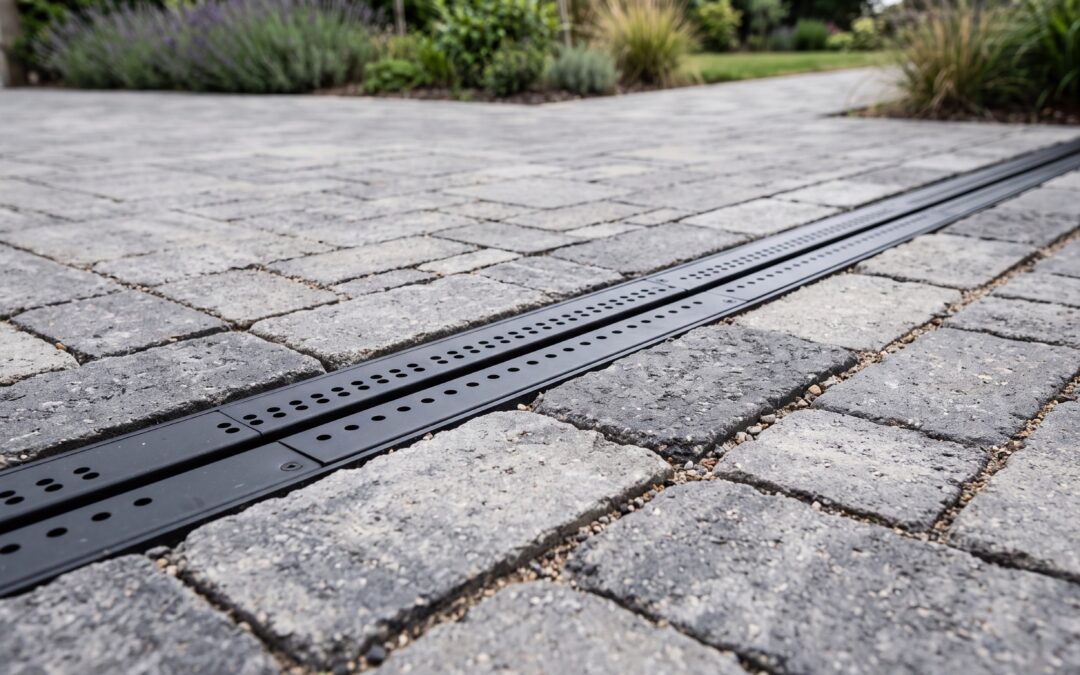
Often referred to as ACO drains, channel drains consist of linear gratings installed at the threshold of a garage, along the perimeter, or where the driveway meets the pavement. These channels capture surface run-off and redirect it safely into a soakaway or a dedicated drainage system. They are highly efficient, particularly for sloping drives, and can be matched with various grating finishes—from classic steel to contemporary slot designs—to complement your choice of driveway paving options.
2. Permeable Sub-bases and Paving
An increasingly popular option is to eliminate surface run-off entirely by utilizing permeable materials. Permeable block paving, porous tarmac, and resin-bound gravel allow rainwater to filter naturally through the surface into a specially engineered sub-base. This sub-base holds the water temporarily before releasing it gradually back into the ground. When choosing the right driveway material, selecting a permeable system is often the most direct route to SuDS compliance without compromising on structural integrity.
3. French Drains and Soakaways
A French drain comprises a trench filled with gravel or shingle containing a perforated pipe. It is designed to redirect surface water away from the driveway area. If your property features clay-heavy soil, which drains poorly, French drains are often paired with a domestic soakaway—a subterranean pit packed with cellular crates or coarse stone where water accumulates and slowly dissipates into the surrounding earth.
Integrating Drainage into Your Project
Proper water management requires precise levelling and fall calculations. Professional installers ensure that the gradient of your driveway directs water towards the installed drainage channels rather than allowing it to pool on the surface. Poorly planned drainage can lead to structural shifting, weed growth, and frost damage during colder months, which can significantly shorten the lifespan of your investment.
By incorporating these drainage solutions at the design stage, you protect both your property’s foundations and its long-term kerb appeal. Consulting with experienced specialists allows you to assess your garden topography and select the most appropriate drainage configurations for your bespoke project.