
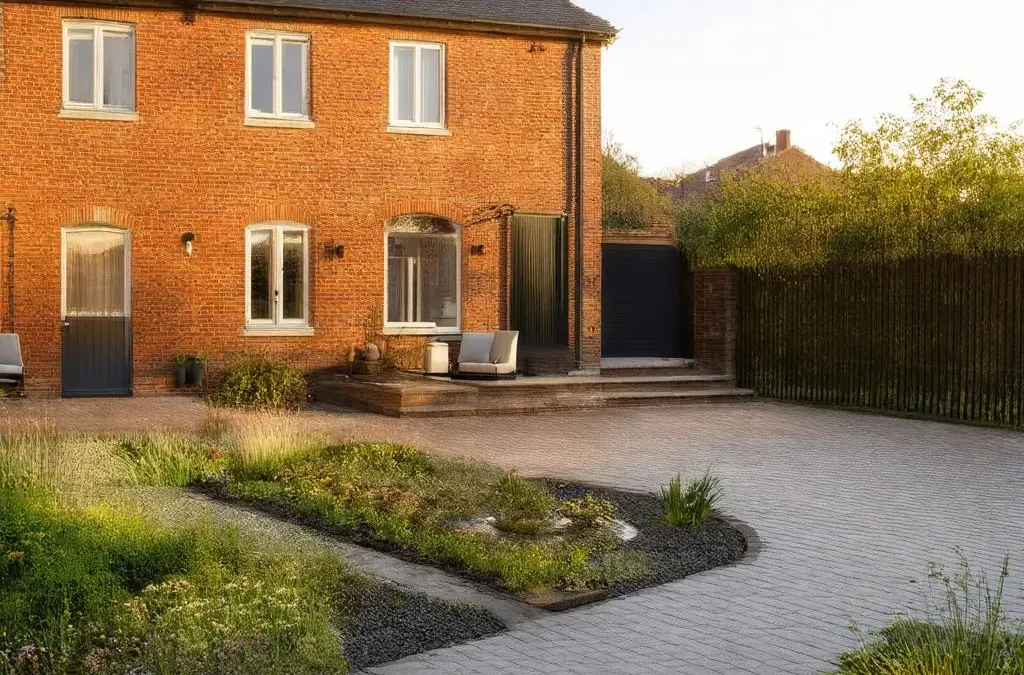
The global pavers market is poised for continued expansion as cities densify, transport links are renewed, and outdoor living becomes a higher priority for homeowners. Urbanisation brings the need for robust, low-maintenance surfaces across public spaces, housing developments and commercial estates, while infrastructure programmes demand hard-wearing, adaptable paving systems with quick installation and long service life. Alongside these drivers, planning and environmental regulations are increasingly shaping surface choices—encouraging permeability, heat mitigation and flood resilience.
For homeowners in Essex, these trends are already visible. Local authorities are prioritising Sustainable Drainage Systems (SuDS), and property owners are seeking patios, driveways and paths that combine style with performance in all seasons. The result is a market that does more than specify stones and slabs: it seeks solutions that are beautiful, durable and demonstrably responsible—solutions that use fewer virgin materials, conserve water on-site and reduce embodied carbon without compromising finish or longevity.
This shift is not only about responding to policy. It reflects a broader change in expectations. Today’s homeowners value outdoor spaces that work hard—hosting family life, simplifying maintenance, and enhancing property value—while also aligning with personal sustainability goals. As suppliers and installers innovate, the choice of materials, sub-base systems and installation methods is expanding, making it easier to select options that meet both aesthetic and environmental priorities.
Materials and methods: innovation with sustainability at the centre
-
Recycled and reclaimed content
- Aggregates derived from crushed concrete and secondary sources are now commonly used in sub-bases, reducing demand for quarried stone while meeting structural performance standards.
- Reclaimed clay bricks and setts bring character to garden paths and borders; when specified correctly, they offer a long second life with minimal additional environmental impact.
- Resin-bound surfaces increasingly incorporate recycled glass and stone fines, creating attractive, free-draining finishes with a reduced footprint.
-
Permeable and water-smart paving
- Permeable block paving systems allow rainwater to infiltrate through the surface and sub-base, easing pressure on drains and helping to prevent localised flooding. For driveways in particular, this approach often supports SuDS compliance and reduces the need for separate drainage channels.
- Grassed or gravel stabilisation grids provide structure for occasional parking and garden paths, encouraging infiltration while retaining a natural look.
- Integrated water features and rain gardens can be designed alongside paved areas to manage runoff gracefully and support biodiversity.
-
Low-carbon and carbon‑neutral binders
- Cement is a significant contributor to the embodied carbon of concrete products. To address this, manufacturers are increasing the use of supplementary cementitious materials such as ground granulated blast-furnace slag (GGBS) and other partial cement replacements, lowering the carbon intensity of concrete blocks and slabs.
- Emerging carbon‑neutral binder options for paving stones combine several approaches: clinker reduction, carbon capture and mineralisation during curing, and—in some cases—verified offsetting to achieve a neutral balance. For homeowners, this means a growing availability of pavers with documented environmental credentials.
- In asphalt and tarmac, warm‑mix technologies and bio‑based additives reduce production temperatures and energy use, cutting emissions while maintaining performance.
-
High‑performance porcelains and natural stone
- Outdoor‑rated porcelain is gaining ground due to its outstanding stain resistance, colour stability and low water absorption. Its longevity reduces the need for replacements and intensive maintenance, offering a practical route to lower whole‑life impact.
- Responsibly sourced sandstone and granite remain staples for timeless patios and paths. When paired with modern sub‑base design and edge restraints, these materials deliver decades of service.
-
Smarter design and installation practices
- Modular formats and precision cutting minimise waste on site, while dry‑lay systems enable repair and reconfiguration without breaking out large areas.
- Light‑coloured surfaces reflect more sunlight, helping to reduce localised heat build‑up in exposed courtyards.
- Thoughtful detailing—such as setting out falls for efficient drainage, specifying durable jointing and sealing where appropriate—extends service life and reduces maintenance inputs.
Collectively, these innovations allow you to select paving that complements your property while lowering resource use, managing water sensitively and reducing embodied carbon—results delivered through choices you can see underfoot and through engineering you will rarely notice but always benefit from.
From public realm to private gardens: what it means for your home
Commercial and municipal projects often adopt new technologies first, but the benefits translate directly to residential settings in Essex. The same principles that guide sustainable streets and plazas—permeability, durability, and efficient maintenance—are reshaping domestic driveways, patios and garden paths.
-
Driveways that manage rain where it falls
- Permeable block paving over a free‑draining sub‑base can dramatically reduce surface water problems, keeping your entrance neat in heavy downpours and protecting nearby planting from erosion.
- Stabilised gravel systems offer a softer look while resisting rutting, combining practicality with a natural aesthetic.
-
Patios that are easy to live with
- Outdoor porcelain tiles deliver a crisp, contemporary appearance and resist staining from barbecues, planters and daily use, lowering the need for chemical cleaners.
- For a classic effect, premium sandstone and granite—sourced with attention to provenance—provide textured finishes that weather gracefully.
-
Paths and features that support biodiversity
- Reclaimed brick paths, permeable joints and planting pockets invite rainwater into the soil and create micro‑habitats for beneficial insects.
- Water features with recirculating pumps add movement and sound while using water efficiently; combined with native planting, they can transform a garden’s ecological value.
-
Finishing details that make the difference
- Edging, kerbs and steps in matching or complementary materials unify the design and protect paved areas from lateral movement.
- Low‑energy lighting and careful material contrast enhance safety and accessibility without sacrificing style.
Crucially, these choices are not only environmentally positive; they deliver practical advantages. Better water management reduces maintenance and damp issues, high‑performance surfaces keep their appearance with minimal effort, and robust materials limit repairs over time. For homeowners considering resale value, a well‑designed, sustainably specified exterior is an asset prospective buyers recognise immediately.
Making it happen in Essex: partnering for responsible, beautiful results
Turning innovation into a finished outdoor space requires careful design, reliable sourcing and expert installation. As a family‑owned business headquartered in Billericay, Stonecraft has spent over 35 years helping Essex homeowners do exactly that—blending craftsmanship with up‑to‑date materials and methods to deliver patios, driveways and gardens that stand the test of time.
What you can expect from a forward‑looking paving project with Stonecraft:
-
Guidance grounded in experience
- Our dedicated, experienced workforce assesses site conditions, drainage, soil type and usage patterns to recommend solutions that meet your needs and align with current best practice.
- As members of the Guild of Master Craftsmen and TrustATrader.com, we maintain high standards of workmanship and customer care on every project.
-
Sustainable options, tailored to your brief
- Permeable block paving systems for driveways, with sub‑bases designed to promote infiltration and structural stability.
- Low‑carbon choices across materials: concrete paving with cement reductions, tarmac installed using warm‑mix methods where appropriate, and porcelain or natural stone specified for long service life.
- Recycled and reclaimed materials integrated thoughtfully—such as reclaimed brick edging, recycled aggregates beneath hard standings, and resin‑bound surfaces with recycled content.
- Water‑wise landscaping that complements paved areas: rain gardens, ponds and water features with efficient recirculation, and planting schemes that reduce runoff while enhancing biodiversity.
-
A comprehensive service beyond paving
- Driveways in block paving, sandstone, porcelain, granite and tarmac.
- Patio installation, bricklaying, garden paths, decking, fencing and complete garden renovations.
- Garden rooms, artificial lawns, ponds and turfing—planned as part of a coherent outdoor scheme that balances aesthetics, functionality and maintenance.
-
Clear assurances and fair pricing
- A 5‑year guarantee on all our work and public liability insurance for your peace of mind.
- Competitive pricing, with new driveways typically ranging between £40 and £100 per m² depending on material and specification.
- Free, no‑obligation quotes, enabling you to compare options and choose the approach that best suits your budget and sustainability goals.
If you are planning to refresh your driveway, create a new patio, or undertake a full garden renovation, now is an ideal moment to take advantage of the industry’s innovation curve. By selecting permeable systems, recycled content and lower‑carbon binders—paired with quality installation—you can achieve a space that is elegant, resilient and easier on the environment.
The future of paving is not an abstract promise; it is a practical set of choices available today. With the right partner and a clear brief, Essex homeowners can create outdoor spaces that feel better to live in, perform better year‑round and contribute positively to the wider environment—setting a standard for homes and gardens that will last for decades.